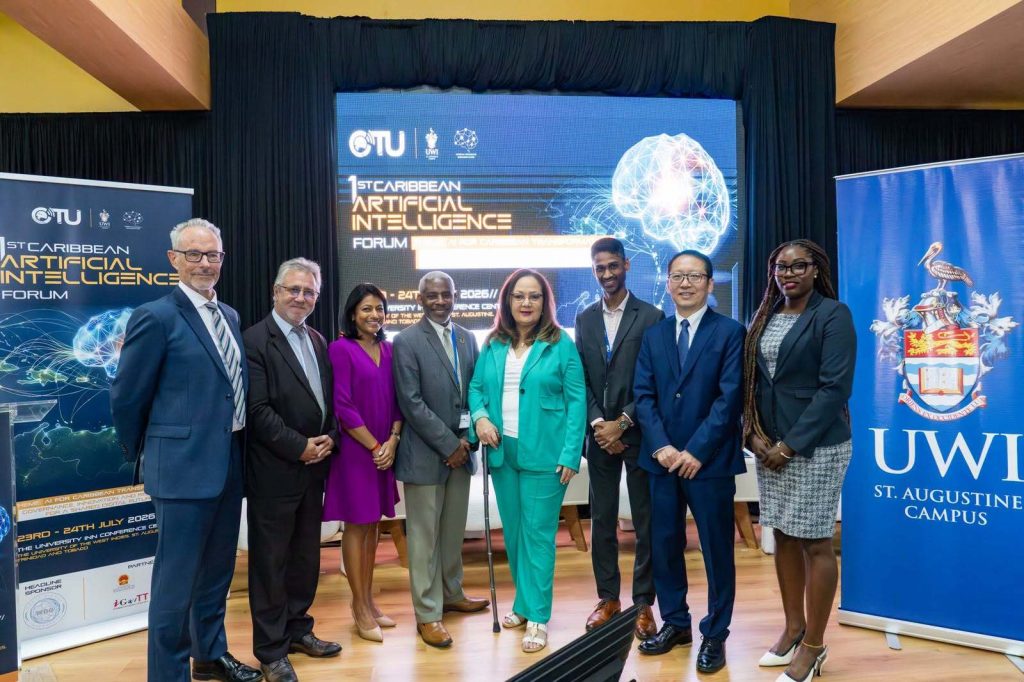
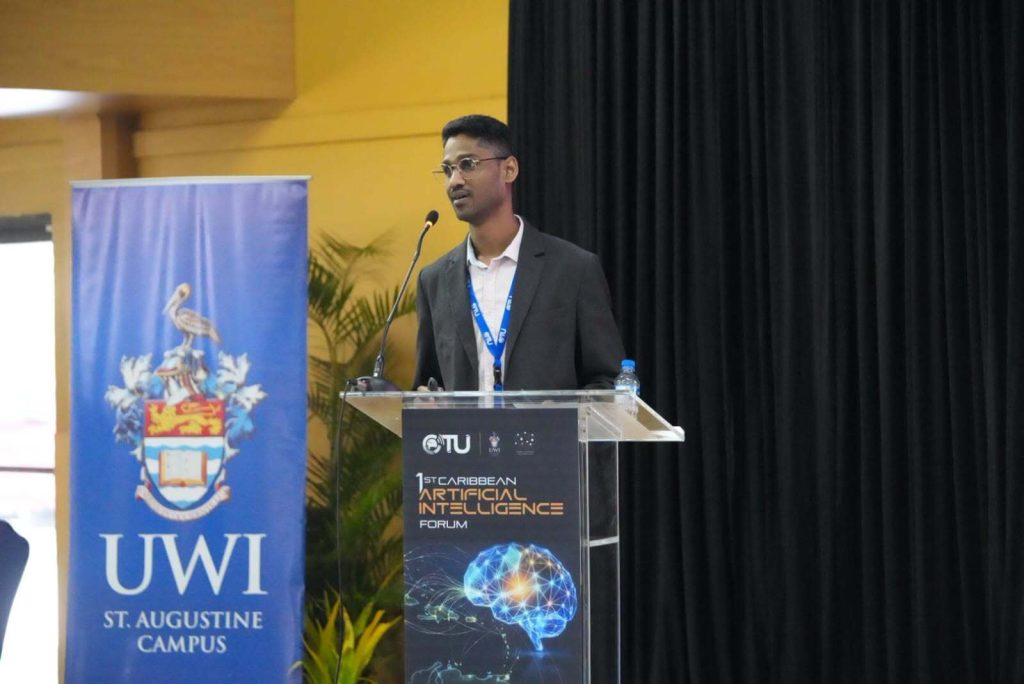
The Caribbean has taken a significant step towards shaping its own artificial intelligence future with the launch of the Caribbean Telecommunications Union’s (CTU) Caribbean AI Task Force (CAITF) Final Report, a landmark regional framework designed to help Caribbean nations harness artificial intelligence through coordinated governance, innovation and regional cooperation.
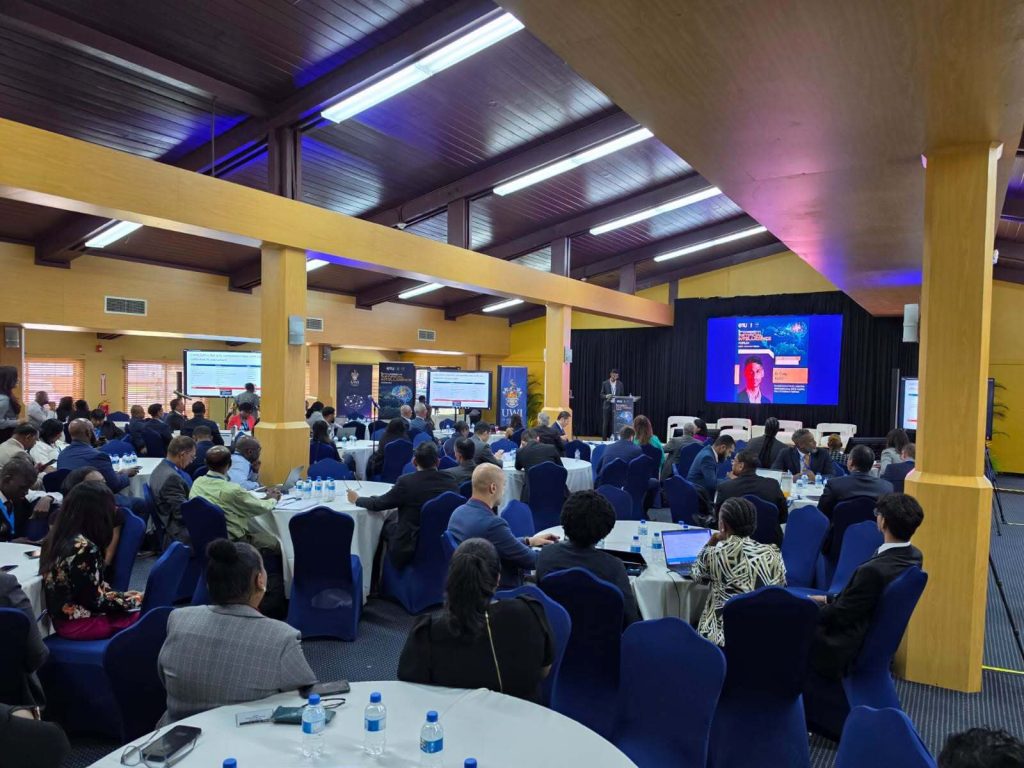
The report was launched during the Inaugural Caribbean Artificial Intelligence Forum (CAIF 2026), jointly hosted by The University of the West Indies (The UWI) and the CTU from 23-24 July 2026 at The University Inn & Conference Centre in St. Augustine. Bringing together Ministers, diplomats, policymakers, researchers, industry leaders and international partners, the Forum represents the region’s most significant collective effort to date to establish a shared vision for artificial intelligence that reflects Caribbean priorities, values and development needs.
Ms. Sandrea Maynard, Pro Vice-Chancellor of The University of the West Indies, noted that The UWI has actively advanced regional collaboration on AI governance, digital policy and capacity-building through its longstanding relationship with the Caribbean Telecommunications Union. She stated that
“The inaugural Caribbean AI Forum reflects the growing recognition that the Caribbean must take a coordinated and collaborative approach to shaping its digital future. The UWI has long recognized that the opportunities and challenges presented by emerging technologies cannot be addressed by any one institution, country or sector acting alone. Through its partnership with the CTU and other regional and international collaborators, The UWI has helped advance research, talent development, innovation and policy leadership across the region. We remain committed to serving as a trusted convener and thought leader in building the skills, research capacity and evidence-based policy frameworks needed to support a Caribbean approach to AI that is ethical, human-centred and aligned with our development priorities.”
Developed over the past year by the 36-member Caribbean AI Task Force, chaired by Dr. Craig Ramlal, Executive Director of The UWI St Augustine Campus’s Artificial Intelligence Innovation Centre, the report presents seven strategic recommendations spanning data and digital infrastructure, governance and ethics, economic transformation, talent and skills development, public sector AI, climate resilience and a coordinated Caribbean voice in global AI governance.
Delivering the keynote address, Graeme Thomson, founding member of World Digital Governance (WDG) the primary event sponsor, described the report as an important milestone in the Caribbean’s digital transformation journey. He believes that,
“The region’s digital future should be controlled here. Built by Caribbean institutions working together; as rule makers, not rule takers.” Mr Thomson was also in high praise of the work done and highlighted that “one of the most significant insights of the report is its accurate diagnosis of the ‘Coordination Gap’ and ‘Implementation Deficit’. It’s time to close the gap and balance the deficit.”
The recommendations come at a pivotal moment. While the global AI market is projected to expand into a multi-trillion-dollar economy over the next decade, the Latin American and Caribbean region currently attracts only a fraction of global AI investment, with the Caribbean accounting for only a handful of indigenous AI enterprises despite high levels of digital engagement. The Task Force argues that unless the region acts collectively, it risks remaining primarily a consumer of imported AI technologies rather than a creator of home-grown innovation.
Opening the Forum, Professor Rose-Marie Belle Antoine, Pro Vice-Chancellor and Campus Principal of The UWI, St. Augustine, said the gathering marked far more than another technology conference.
“Today is particularly significant because this Forum is not simply a conference about technology. It reflects our collective commitment to ensuring that the Caribbean is not merely a consumer of emerging technologies, but an active contributor to their development, governance and responsible application. The question before us is not whether AI will shape our future, but how we will collectively shape it to serve our region.”
Professor Antoine also highlighted The UWI’s longstanding leadership in artificial intelligence, noting that the Faculty of Engineering hosted the Caribbean’s first AI conference in 1989. Building on that legacy, the Campus established the Artificial Intelligence Innovation Centre (AIIC) in December 2025, now the Caribbean’s largest dedicated AI centre—to advance research, commercialisation, capacity building, policy development and regional AI governance.
Welcoming delegates from across the region and beyond, Nigel Cassimire, Deputy Secretary-General of the Caribbean Telecommunications Union, said the Forum reflects a commitment to ensuring artificial intelligence delivers meaningful benefits for Caribbean societies.
“We gather not to celebrate technology for its own sake, but to explore how artificial intelligence will serve our people, our economies and our shared future as Small Island Developing States. This Forum must do more than talk. It must identify practical pathways for implementation and leave us with commitments that are time-bound, fundable and measurable.”
Delivering an overview of the Caribbean AI Task Force’s work, Dr. Craig Ramlal outlined the challenges confronting the region, including brain drain, limited investment, fragmented governance frameworks, under-representation in global AI datasets and a shortage of indigenous AI enterprises. He argued that no single Caribbean nation possesses the scale to address these challenges independently.
“AI is a moving target, and we are worryingly veering off course. Individually, our markets are simply too small; individually, our human capital is too thinly distributed; and individually, the financial, computational and institutional burden is too great. The minimum viable scale for correcting our course is therefore not national, it is regional.”
Dr. Ramlal noted that while other regions have already adopted coordinated AI governance frameworks, CARICOM remains the only comparable regional bloc without an agreed collective AI governance instrument. Rather than creating another report, he said, the Task Force’s objective has been to provide practical, implementable recommendations that enable Caribbean countries to harmonise governance while respecting national priorities.
The Caribbean AI Task Force resolution was adopted in October 2025 following a resolution of Caribbean ICT Ministers and comprises representatives from governments, academia, the private sector, civil society, multilateral organisations and regional institutions. Its work has been supported by the International Telecommunication Union (ITU) and the CARICOM Secretariat. Over the past year, the Task Force has undertaken extensive consultations, published an interim report, received regional feedback and refined its recommendations ahead of the release of the final report.
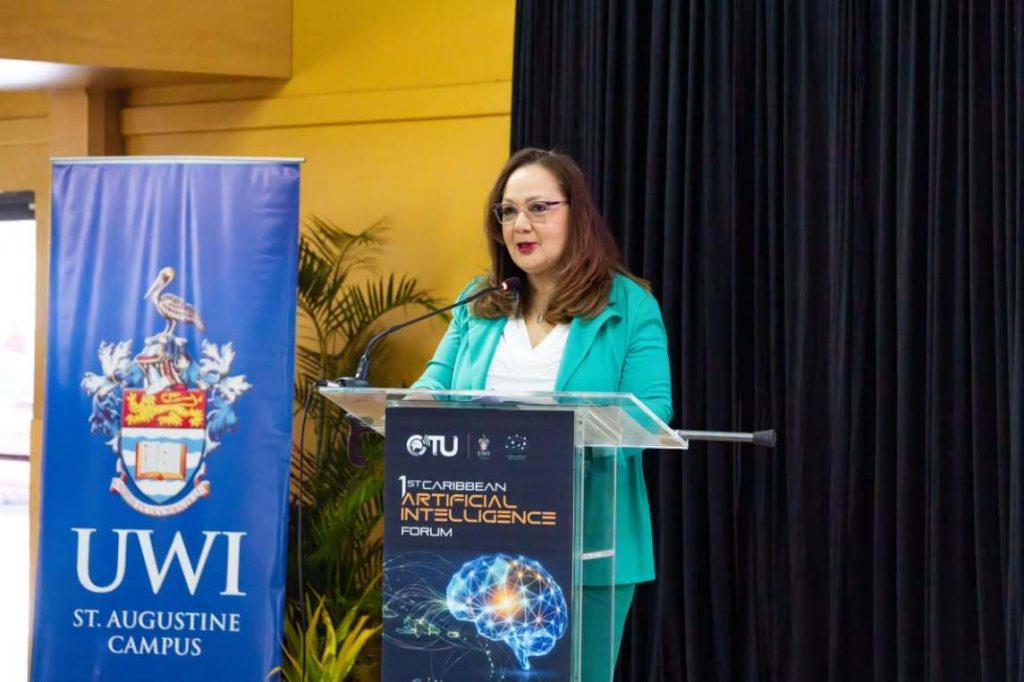
Addressing the Forum, and delivering remarks on behalf of Senator the Honourable Dominic Smith, the Minister of Public Administration and Artificial Intelligence and President of the CTU, Ms. Jaya Ramoutar, Manager Project Management Unit at the Ministry described the Caribbean as standing at “one of the defining policy moments of our generation.
“Our task is not simply to adopt AI. Our task is to shape AI in ways that reflect Caribbean realities, priorities and values. We must ensure that the benefits of this technology are not limited to a few sectors, countries or communities, but are made available across our societies in ways that are practical, inclusive and sustainable.”
Ms. Ramoutar said achieving that vision will require closer regional cooperation, harmonised policy frameworks, trusted digital infrastructure, investment in skills development and a stronger Caribbean voice in global AI governance. She stressed that AI governance must remain human-centred, protecting public trust while enabling responsible innovation and ensuring that technology serves people rather than the other way around.
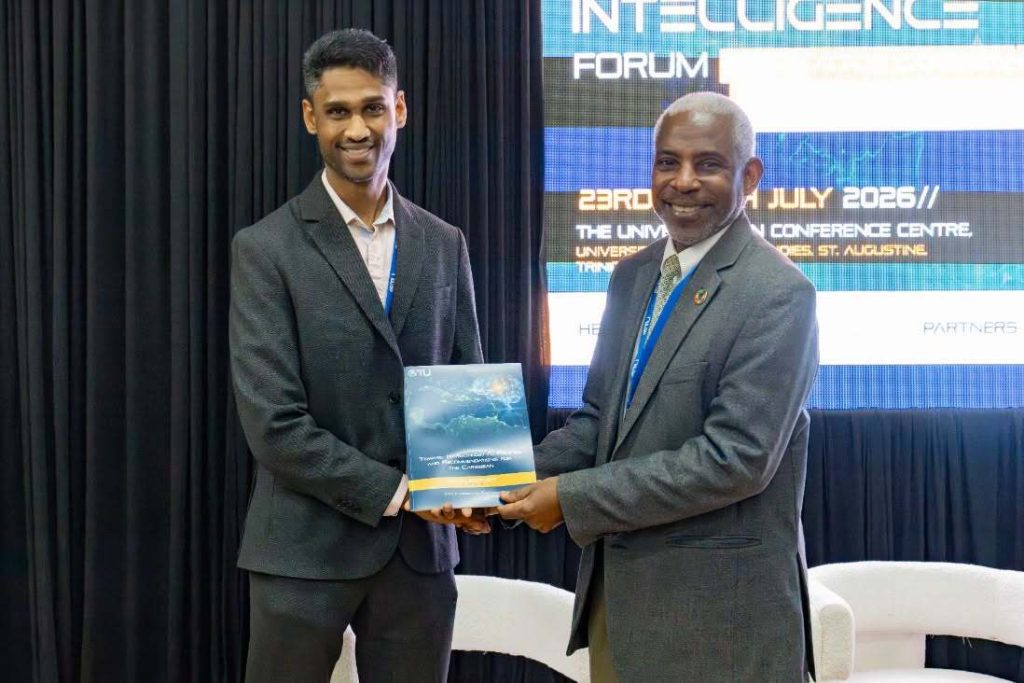
The Forum also featured international perspectives on digital governance, high-level discussions involving diplomatic representatives, government leaders and regional experts, and the official presentation of the Caribbean AI Task Force Final Report.
For The UWI, the Forum reinforces the University’s role as a regional leader in artificial intelligence research, policy and innovation. The University continues to advance interdisciplinary research, develop Caribbean AI expertise, support public policy and foster partnerships that position the region to participate more fully in the global AI economy.
As delegates begin discussions on implementing the Task Force’s recommendations, organisers expressed confidence that the Forum will mark the beginning of a more coordinated regional approach to artificial intelligence, one grounded not only in technological advancement, but also in Caribbean values, resilience and sustainable development.
“Let this first Caribbean AI Forum mark a turning point,” Ms Ramoutar concluded. “Let this Forum be remembered as the moment when the Caribbean chose implementation over aspiration, cooperation over fragmentation and leadership over hesitation.”
For participants, the Forum marked not simply another conversation about artificial intelligence, but the beginning of what many described as the Caribbean’s “implementation era”, where regional ambition is translated into coordinated action.
The CTU’s Caribbean AI Task Force final report 2026 entitled “Toward Harmonized AI Policies and Recommendations for the Caribbean” can be accessed at the following link.
https://ctu.int/wp-content/uploads/2026/07/CAITF-Final-Report.pdf