“I had no idea there were so many beneficial insects. I used to spray everything because I didn’t know I was killing the good insects as well. This programme completely changed the way I think about farming.”
That was the experience of one farmer after completing the first Farmer Field School under the Biodiversity Conservation and Agroecological Land Restoration in Productive Landscapes of Trinidad and Tobago (BIOREACH) Project.
The BIOREACH Project is funded by the Global Environmental Facility (GEF), led by the Food and Agriculture Organization of the United Nations (FAO) on behalf of the Ministry of Planning, Economic Affairs and Development and is executed by the Environmental Management Authority (EMA) and the National Agricultural Marketing and Development Corporation (NAMDEVCO).
Why the Farmer Field School Approach?
The Farmer Field School helps farmers understand what is happening in their fields and make better decisions based on what they see. Instead of automatically reaching for pesticides or costly inputs, they learn to identify beneficial insects, monitor pest activity and apply practical, low-cost solutions.
This is especially important at a time when farmers face rising costs, unpredictable weather and growing pressure on natural resources. Through simple demonstrations led by experts and fellow farmers, participants see firsthand what works best on their own land. Put into practice, these methods can ease costs, boost yields and build stronger, more resilient farms while protecting the environment and their own health.
Ms. Nirmalla Debysingh, Chief Executive Officer of NAMDEVCO, emphasized the importance of investing in farmers through practical agricultural training. She noted: “At NAMDEVCO, we are proud to champion the Lead Farmer Training Programme under the BIOREACH Project, equipping farmers with the knowledge and practical skills needed to adopt more sustainable agricultural practices. By investing in our farmers, we are strengthening the resilience of the agricultural sector while supporting environmental stewardship and long-term food security.”
The first programme delivered impressive results:
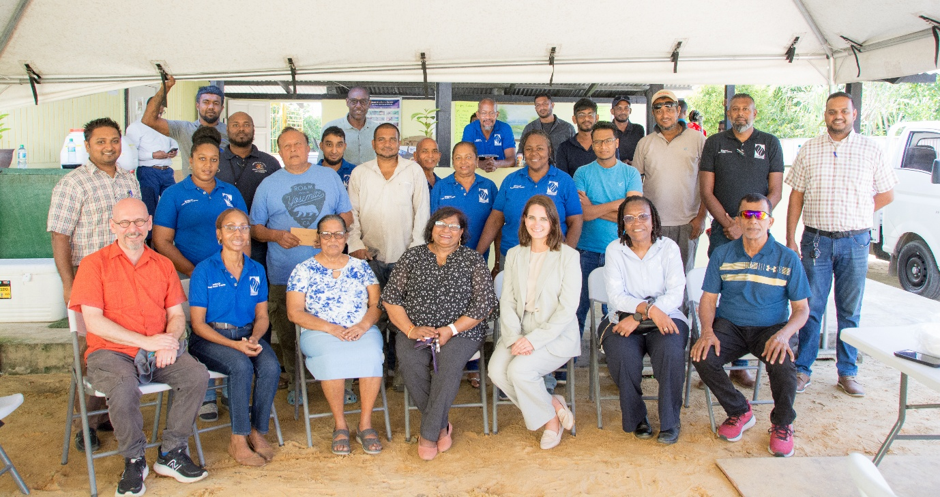
- 29 farmers successfully completed the training.
- 93% adopted new farming practices.
- 85% became better at identifying beneficial insects.
- 77% now assess their fields before applying pesticides, reducing unnecessary chemical use.
As another farmer explained, “Before this training, I would see pests and immediately reach for chemicals. Now I know how to identify the beneficial insects and let them control the harmful pests naturally.”
The programme also showed that agroecological farming can significantly reduce costs. Field trials found that farmers using these methods reduced production inputs by 59%, making their farms more profitable while building resilience for the future.
A National Investment in Sustainable Agriculture
Minister of Planning, Economic Affairs and Development, Senator Dr. the Honourable Kennedy Swaratsingh, described the programme as an important investment in building a stronger, more sustainable and food-secure agricultural sector.
He noted: “The successful completion of the first cycle of the Farmer Field School Programme marks an important step in strengthening Trinidad and Tobago’s agricultural sector and advancing our commitment to national sustainable development. I firmly believe that investing in the training and development of our farmers is essential to building a more sustainable and food-secure future. Sustainable agriculture goes beyond increasing production; it is about equipping farmers with the tools and techniques needed to adapt to changing climatic conditions, protect natural resources and strengthen rural livelihoods. Well-trained farmers are better positioned to embrace innovation, improve efficiency and contribute meaningfully to national development.”
Good for Farmers, Good for Biodiversity
Dr. Joth Singh, Managing Director/CEO of the EMA, underscored the importance of the executing agencies which are responsible for the day-to-day implementation and delivery of a project on the ground. “The EMA is honoured to be one of the key executing agencies for BIOREACH working hand in hand with communities. Through this project, we are demonstrating that protecting biodiversity is not in conflict with farming, it is complementary and fundamental to it. By restoring the natural balance of our productive landscapes, farmers can reduce costs, improve resilience and create more sustainable livelihoods while safeguarding Trinidad and Tobago’s rich biodiversity.”
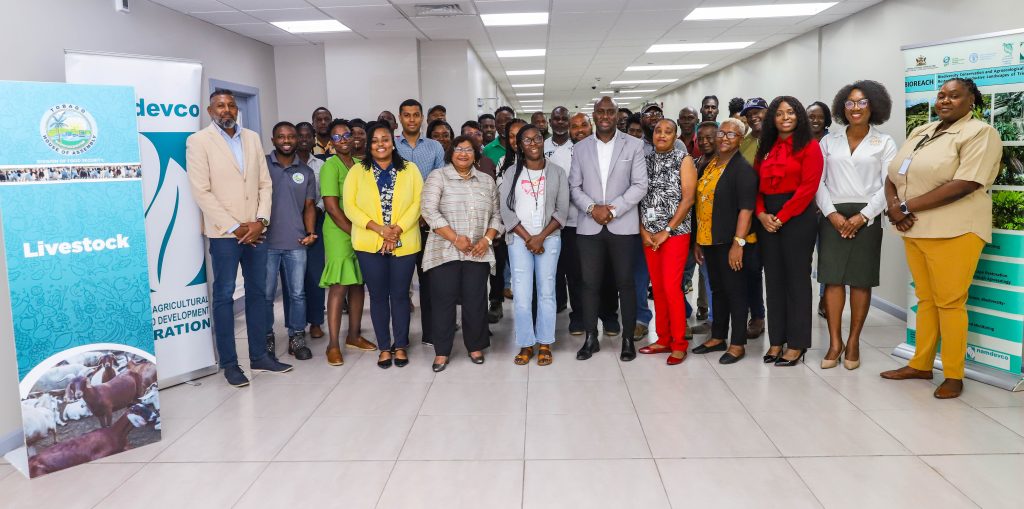
Following the success of the first Farmer Field School, the programme has expanded to Tobago, with additional schools planned across Trinidad, giving even more farmers the opportunity to learn practical skills that can improve their farms, reduce costs and support a more sustainable future.
About the BIOREACH Project
The Biodiversity Conservation and Agroecological Land Restoration in Productive Landscapes of Trinidad and Tobago (BIOREACH) Project works with farmers, communities and other stakeholders to promote farming practices that support both agricultural production and biodiversity conservation. Through activities such as Farmer Field Schools and Lead Farmer Training Programmes, the project helps build more sustainable and resilient farming systems while protecting Trinidad and Tobago’s natural environment.